
Circular Process
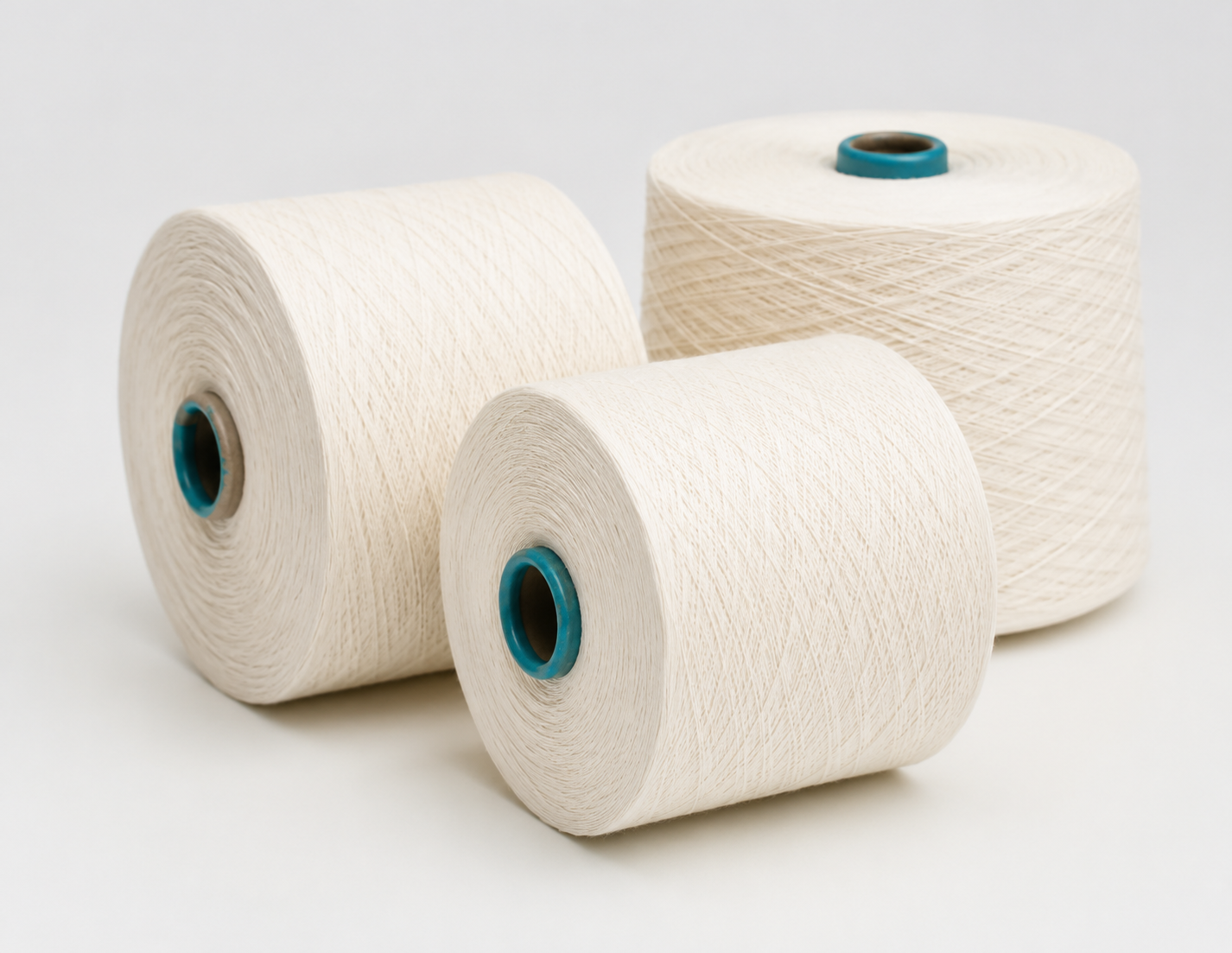
From textile waste to new textiles — a cleaner, greener process.

03
Our Impact
Creating environmental, social and economic value through textile circularity.
Sustainability
01
Environmental Impact
Contact Form
✉ Enquiry Form
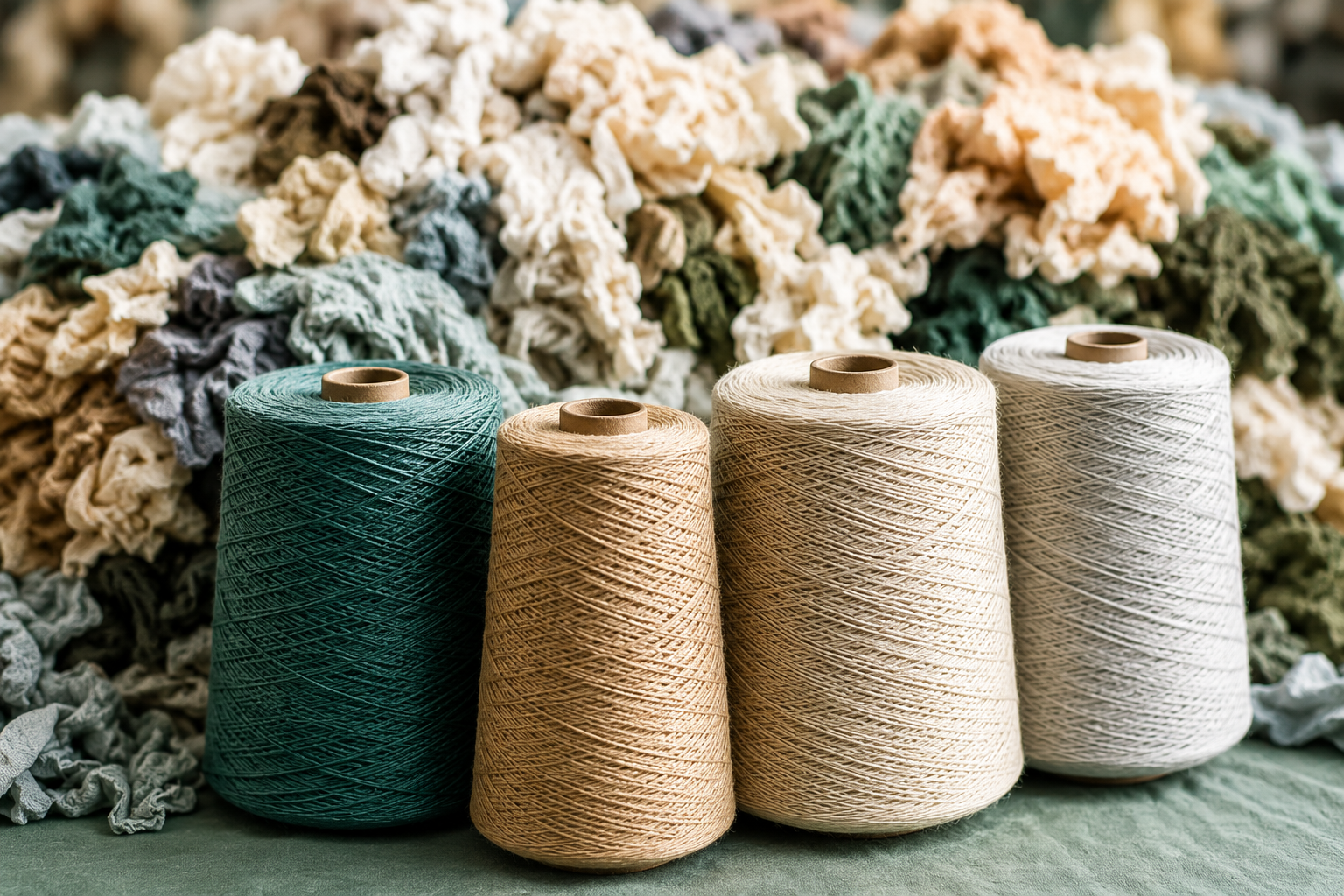
From Waste to Yarn: The Science Behind Fiber Regeneration
February 28, 2025
Gohana Spinners
How textile waste is transformed into new fibres—and why the science of opening, blending and spinning matters
What happens to a piece of textile waste after it leaves a garment factory?
For most people, the answer might seem simple: it gets shredded and turned back into yarn.
In reality, transforming textile waste into a usable recycled fibre is a carefully controlled engineering process.
Every stage matters—from selecting and sorting the incoming waste to opening, cleaning, blending and finally spinning the recovered fibres into yarn. The challenge is not simply to recover fibre. It is to recover the right fibre, with enough length, cleanliness and consistency to create a useful textile product.
At Gohana Spinners, this is at the heart of our approach to circular textile manufacturing.
We don't simply process waste. We work to recover its remaining material value.
01
It Starts With the Right Waste
The quality of recycled fibre is strongly influenced by the quality of the material entering the recycling process.
Before anything is mechanically recycled, the material needs to be assessed and sorted.
Composition, colour, construction, contamination and fibre characteristics all influence how the material should be processed.
This is particularly important for blended textiles.
Pre-consumer textile waste can include:
Cotton cutting waste
Denim cuttings
Selvedges
Spinning waste
Hard waste
Cotton-polyester fabric waste
Fleece and other textile production remnants
The better the input is understood, the better the recycling process can be controlled.
02
Sorting: Where Fibre Engineering Begins
Sorting is often considered a basic operation, but it is actually one of the most important stages in recycled fibre production.
Textile materials can be separated according to fibre composition, colour, fabric construction, quality and contamination.
Removing unsuitable material before processing prevents problems later in the line.
Unwanted accessories, foreign materials or incompatible fibre compositions can affect opening efficiency, fibre cleanliness and ultimately yarn quality.
Fibre composition
Colour
Fabric construction
Quality
Contamination
Good recycled yarn begins with good recycled raw material.
03
Mechanical Recycling: Breaking the Fabric Structure
Once the material has been sorted, it enters the mechanical recycling process.
Unlike chemical recycling, mechanical recycling does not dissolve the fibre at a molecular level.
Instead, the textile structure is progressively opened through mechanical action.
During opening, the fabric structure is broken down and individual fibres are progressively released.
The objective is controlled opening.
04
The Fibre Length Challenge
Virgin cotton enters spinning with a natural distribution of fibre lengths.
Mechanical recycling changes that distribution.
When textile material passes through cutting, tearing, opening and carding operations, some fibres are shortened.
Fibre length is particularly important because it directly influences how fibres interact with one another during yarn formation.
Shorter fibres have fewer opportunities to overlap and contribute to yarn strength.
The result can be:
Higher short-fibre content
Reduced average fibre length
Increased fibre damage
More dust
Changes in fibre strength
Greater challenges during spinning
The goal therefore isn't simply to recover the maximum possible quantity of fibre. It is to achieve the best balance between recovery and fibre quality.
05
Cleaning and Fibre Preparation
After opening, the recovered fibre needs further preparation.
Dust, impurities, residual textile particles and other unwanted material must be controlled.
Carding and fibre preparation play an important role here.
The recovered material can then be prepared for blending and subsequent spinning.
Carding helps to:
Further open fibre tufts
Separate fibres
Remove impurities
Improve fibre orientation
Create a more uniform fibre mass
06
Blending: Turning Variation Into Consistency
One of the most important tools available to a recycled yarn manufacturer is blending.
Different recovered fibres can have different length distributions, strength, fineness, colour, composition and processing behaviour.
By combining materials with complementary characteristics, manufacturers can create a more consistent fibre feed.
The objective is to engineer a fibre blend capable of producing the required yarn performance.
Recovered fibres can differ in:
Length distributions
Strength
Fineness
Colour
Composition
Processing behaviour
07
Why Rotor Spinning Is Important for Recycled Fibre
Recycled fibres often contain a higher proportion of shorter fibres than virgin cotton.
This creates challenges for conventional spinning systems.
Open-end rotor spinning is particularly relevant to recycled fibre applications because it can accommodate fibre populations that would be more difficult to process into finer yarns through some other spinning routes.
The recovered fibre is converted into a sliver, fed into the spinning system and ultimately transformed into yarn.
08
The Science Is in the Balance
The biggest misconception about recycled fibre is that recycling simply means recovering as much material as possible.
In reality, recycling is an optimisation problem.
Increasing mechanical intensity may improve opening—but can also increase fibre damage.
Aggressive processing may release more fibre—but may also increase short fibre and dust.
Higher recycled content may require more sophisticated fibre engineering to maintain yarn performance.
Input quality
+
Opening efficiency
+
Fibre length
+
Cleanliness
+
Blending
+
Carding
+
Spinning
09
From Recovered Fibre to Recycled Yarn
Once the fibre has been prepared and blended, it enters the spinning process.
The objective is to convert a loose and irregular mass of fibres into a continuous structure capable of performing as yarn.
During spinning, fibres are brought together and twisted or consolidated to create cohesion.
The exact application depends on the fibre characteristics, blend composition, yarn count and required performance.
The final yarn can then be used in applications such as:
Denim
Towels
Knitted fabrics
Home textiles
Upholstery
Industrial textiles
Other applications where recycled yarn specifications are suitable
10
Why Every Fibre Has a Second Life
Mechanical recycling does not make textile waste disappear.
It gives existing material another opportunity to remain within the textile value chain.
The objective is to keep materials in productive use for as long as technically and economically possible.
This is the fundamental idea behind fibre-to-fibre recycling.
A circular approach aims to keep materials in productive use for as long as technically and economically possible.
The Future of Fibre Regeneration
The future of textile recycling will depend on more than recycling machines.
It will depend on better sorting, better feedstock quality, improved opening technology, fibre characterisation, intelligent blending and increasingly precise spinning processes.
There will not be one single recycling technology for every textile.
The future will likely be a combination of technologies, each matched to the material it can process most effectively.
From Waste to Possibility
A textile cutting may look like waste.
From a fibre engineer's perspective, it is something different.
It is a collection of fibres that already contain embedded material value.
The challenge is to recover those fibres carefully, understand their characteristics and give them a new purpose.
At Gohana Spinners, we believe that circular textile manufacturing begins with this change in perspective.
Waste is not necessarily the end of a fibre's journey.
Mechanical recycling is particularly sensitive to fibre shortening and material composition. The quality and application of recycled yarn therefore depend on the characteristics of the incoming textile waste and the processing route used. Recycled fibre specifications should be evaluated through appropriate fibre and yarn testing rather than assuming that all textile waste will produce the same result.
From textile waste to regenerated fibre.
From regenerated fibre to recycled yarn.
From recycled yarn to the next generation of textiles.
Recover. Regenerate. Recirculate.
More Articles You’ll Love
Connect With Us
9 AM - 6 PM, Monday - Saturday
Make A Call
+91-9350716197
Send a Mail
info@gohanaspinners.com
Copyright © 2025 Gohana Spinners Pvt. Ltd.
Developed and Maintained By Blue Brain Technologies Pvt. Ltd.